


How to Apply for a Canadian Passport: A Comprehensive Guide


How to apply for a Canadian Passport. Applying for a Canadian passport is an essential step for Canadian citizens who wish to travel internationally or prove their identity. Whether you’re applying for the first time, renewing your passport, or assisting a child with their application, understanding the process is crucial. This comprehensive guide will walk you through every step of applying for a Canadian passport, ensuring a smooth and successful experience.
What is a Canadian Passport?
A Canadian passport is an official, government-issued travel document that serves as proof of identity and nationality for Canadian citizens. It allows the holder to travel internationally and return to Canada. Issued by Immigration, Refugees and Citizenship Canada (IRCC), the Canadian passport is recognized worldwide and adheres to international standards set by the International Civil Aviation Organization (ICAO).
Key Features of a Canadian Passport
1. Purpose
- Travel Abroad: Enables Canadian citizens to enter foreign countries and re-enter Canada.
- Proof of Identity: Acts as a secure and reliable form of identification both domestically and internationally.
- Proof of Citizenship: Confirms the holder’s status as a Canadian citizen.
2. Physical Characteristics
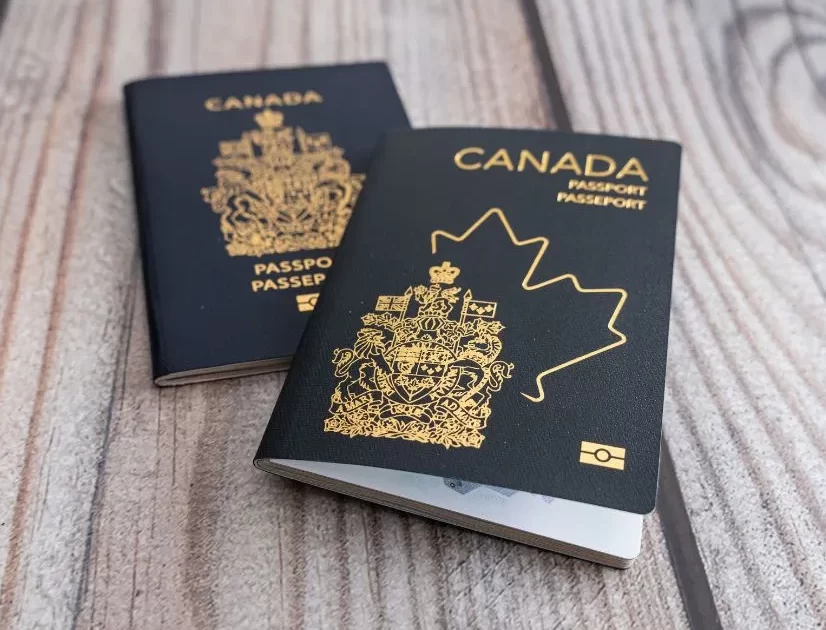
- Cover Color: Navy blue with the coat of arms of Canada embossed in gold on the front.
- Text: “PASSPORT / PASSEPORT” appears above the emblem in both English and French, Canada’s two official languages.
- Pages: Contains 36 or 48 pages for visas, entry/exit stamps, and other travel-related endorsements.
- Dimensions: Standard size of 125 mm x 88 mm, conforming to ICAO specifications.
3. Biometric Features
- Modern Canadian passports are e-passports, meaning they include an embedded electronic chip.
- The chip stores the holder’s biometric data, including:
- A digital photo of the passport holder.
- Personal information such as name, date of birth, and passport number.
- This enhances security and expedites border crossings at automated kiosks.
Security Features
The Canadian passport incorporates advanced security measures to prevent forgery and tampering. These features include:
- Embedded Chip:
- Stores encrypted biometric data.
- Can be scanned at border control checkpoints.
- Holograms and Watermarks:
- Pages contain holographic images and intricate designs visible under UV light.
- A watermark of the maple leaf (a national symbol) appears throughout the document.
- UV-Reactive Ink:
- Certain elements glow under ultraviolet light, making alterations easily detectable.
- Laser-Engraved Data:
- Personal information, such as the holder’s name and photo, is laser-engraved into the data page to ensure durability and resistance to tampering.
- Thermal Ink:
- Some text changes color when exposed to heat.
Contents of a Canadian Passport
1. Data Page
The first page of the passport contains essential information about the holder:
- Passport Number: Unique identifier for the document.
- Photo: A recent photograph of the passport holder.
- Name: Full legal name (surname and given names).
- Date of Birth: Format: DD MMM YYYY (e.g., 01 JAN 1990).
- Place of Birth: City and country of birth.
- Sex: M (Male), F (Female), or X (Non-binary/gender-diverse).
- Nationality: CAN (Canada).
- Issuing Authority: “Government of Canada.”
- Date of Issue: When the passport was issued.
- Date of Expiry: Valid for up to 10 years for adults (age 16+) and 5 years for children (under age 16).
2. Signature Page
- Located near the back of the passport.
- Requires the holder’s original signature upon receipt of the document.
3. Inner Pages
- contains blank visa pages for entry/exit stamps and visas.
- Feature cultural and historical imagery, such as Canadian landscapes, wildlife, and landmarks, printed using intaglio printing techniques.
Validity Periods
The validity of a Canadian passport depends on the age of the applicant:
- Adults (Age 16+): 10 years.
- Children (Under Age 16): 5 years.
Types of Canadian Passports
- Regular Passport:
- Issued to ordinary citizens for personal or business travel.
- Available in 36-page or 48-page formats.
- Diplomatic Passport:
- Issued to diplomats, government officials, and individuals traveling on official state business.
- Special Passport:
- Issued to members of the Canadian Armed Forces and other government employees traveling on official duty.


How to Obtain a Canadian Passport
To apply for a Canadian passport, you must meet the following requirements:
- Be a Canadian citizen.
- Provide proof of citizenship (e.g., birth certificate, citizenship certificate).
- Provide proof of identity (e.g., driver’s license, provincial ID).
- Submit two identical passport photos taken within the last six months.
- Complete the application form and pay the applicable fee.
Applications can be submitted online, by mail, or in person at a Service Canada center or Canadian embassy/consulate abroad.
Uses of a Canadian Passport
- International Travel:
- Allows Canadians to visit over 180 countries without a visa or with visa-on-arrival privileges.
- Required for boarding international flights.
- Proof of Identity:
- Accepted globally as a secure and reliable form of identification.
- Emergency Assistance:
- Grants access to consular services provided by Canadian embassies and consulates abroad during emergencies.
Why Is a Canadian Passport Important?
- Global Mobility:
- Ranked among the most powerful passports in the world, offering visa-free or visa-on-arrival access to numerous countries.
- Security and Trust:
- Features advanced security measures to protect against fraud and misuse.
- Symbol of Citizenship:
- Represents the holder’s connection to Canada and its values.
- Legal Requirement:
- Necessary for re-entering Canada after traveling abroad.
A Canadian passport is more than just a travel document—it is a symbol of national identity, security, and global mobility. By adhering to strict issuance standards and incorporating cutting-edge technology, the Canadian government ensures that its passports remain secure, reliable, and respected worldwide.
Whether you’re planning international travel, proving your identity, or seeking consular assistance abroad, a Canadian passport is an indispensable tool for every citizen.
A Canadian passport is an official government-issued document that serves as proof of identity and nationality for Canadian citizens. It enables international travel, provides access to consular services, and reflects the holder’s connection to Canada. Featuring advanced security measures, it is valid for 10 years for adults and 5 years for children. Always obtain a passport through official channels to ensure authenticity
1. Who Can Apply for a Canadian Passport?
To apply for a Canadian passport, you must be a Canadian citizen. Citizenship can be obtained by:
- Birth in Canada.
- Being born outside Canada to at least one Canadian parent.
- Completing the naturalization process (becoming a citizen through immigration).
If you’re unsure about your citizenship status, consult Immigration, Refugees and Citizenship Canada (IRCC) for guidance.
2. Applying for a Canadian Passport from the US or UK
If you’re a Canadian citizen residing outside Canada, such as in the US or the UK, you can still apply for a Canadian passport. Here’s how:
Steps to Apply:
- Locate the Nearest Embassy or Consulate:
- Visit the official website of Global Affairs Canada to find the nearest Canadian embassy or consulate in your area.
- Gather Required Documents:
- Proof of Canadian citizenship (e.g., birth certificate, citizenship certificate, or naturalization certificate).
- Proof of identity (e.g., valid driver’s license, provincial ID, or foreign passport).
- Two identical passport photos that meet Canadian standards.
- Complete the Application Form:
- Download and fill out the appropriate application form from the IRCC website.
- Ensure all information is accurate and matches your supporting documents.
- Submit Your Application:
- Deliver your completed application, supporting documents, and fees to the embassy or consulate.
- Processing times vary depending on location, so plan accordingly.
3. Renewing Your Canadian Passport
If your Canadian passport is expired or nearing expiration, you can renew it easily. Renewal can be done online or by mail, depending on your eligibility.
Eligibility for Online Renewal:
- Your previous passport was issued after January 1, 2010.
- It was issued when you were 16 years or older.
- It is not damaged or lost.
Steps to Renew:
- Visit the Official Website:
- Go to the IRCC website and select the “Renew Passport” option.
- Upload Supporting Documents:
- Scan and upload a digital copy of your current passport.
- Include two new passport photos if required.
- Pay the Fee:
- Use a credit card or other accepted payment methods to pay the renewal fee.
- Mail Your Old Passport:
- After submitting your online application, mail your old passport to the address provided.
For those ineligible for online renewal, download the paper application form, complete it, and send it via mail along with your supporting documents.
4. Applying for a Canadian Passport Outside of Canada
Canadian citizens living abroad can apply for a passport through their local Canadian embassy or consulate. The process is similar to applications made within Canada but may involve additional steps.
Steps to Apply Abroad:
- Contact the nearest Canadian embassy or consulate to confirm requirements.
- Gather proof of citizenship, identity, and passport photos.
- Complete the application form and submit it in person or by mail.
- Pay the applicable fee using the accepted payment method.
Processing times may vary, so apply well in advance of your planned travel date.
5. Applying for a Canadian Passport After a Citizenship Ceremony
After becoming a Canadian citizen during a citizenship ceremony, you can immediately apply for a Canadian passport. Here’s what you need to do:
Required Documents:
- Proof of citizenship (your Citizenship Certificate issued during the ceremony).
- Proof of identity (e.g., photo ID used during the citizenship application process).
- Two identical passport photos.
Steps to Apply:
- Complete the application form for a new passport.
- Submit your Citizenship Certificate, ID, photos, and fees.
- Mail your application or visit a Service Canada center if available.
6. Applying for a Child’s Canadian Passport Born Abroad
If your child was born outside Canada but qualifies as a Canadian citizen, you can apply for their passport. Follow these steps:
Required Documents:
- Proof of the child’s Canadian citizenship (e.g., birth certificate showing at least one Canadian parent).
- Proof of the child’s identity (e.g., foreign passport or national ID).
- Two identical passport photos of the child.
Steps to Apply:
- Complete the child-specific application form.
- Provide consent from both parents (if applicable).
- Apply along with the required documents and fees.
Note: If the child does not have proof of citizenship, you may need to apply for a Citizenship Certificate first.
7. Filling Out the Application for a Canadian Passport
Accuracy is critical when filling out your passport application. Mistakes can lead to delays or rejection. Follow these tips:
Tips for Accuracy:
- Double-check all personal details (name, date of birth, etc.) against your supporting documents.
- Use black ink for handwritten forms or type them electronically.
- Sign and date the form where required.
- Include all necessary documents and fees.
8. Applying for a Canadian Passport Online
As of 2024, Canadians can conveniently apply for passports online. This streamlined process saves time and reduces errors.
Steps to Apply Online:
- Visit the official IRCC website and log in to your account.
- Select the “Apply for a Passport” option.
- Upload scanned copies of your supporting documents.
- Pay the fee securely using a credit card or one of our other accepted methods.
- Track your application status online.
Online applications are ideal for renewals or straightforward cases. For complex scenarios (e.g., name changes), paper applications may still be required.
9. Applying for Canadian Citizenship
Before applying for a passport, some individuals may need to apply for Canadian citizenship. Here’s how:
Eligibility Requirements:
- Be a permanent resident of Canada.
- Have lived in Canada for at least 1,095 days in the five years preceding the application.
- Pass the citizenship test (if aged 18–54).
- Meet language proficiency requirements.
Steps to Apply:
- Gather required documents (PR card, language test results, etc.).
- Complete the online application form.
- Pay the application fee.
- Attend an interview and/or take the citizenship test if required.
- Participate in the citizenship ceremony to receive your Citizenship Certificate.
Once you become a citizen, you can proceed with your passport application.
10. Tips for a Smooth Application Process
To ensure your passport application goes smoothly, follow these tips:
- Start early: Processing times can vary, especially during peak seasons.
- Use high-quality photos: Poor-quality photos are a common reason for rejection.
- Keep copies: Save duplicates of all submitted documents for your records.
- Avoid third-party services: Scammers often pose as legitimate providers; always use official channels.
Conclusion
Obtaining a Canadian passport is a straightforward process when you understand the requirements and steps involved. Whether you’re applying for the first time, renewing your passport, or helping a child apply, this guide has covered everything you need to know. Remember to always use official resources, gather accurate documentation, and double-check your application before submission.
By following these steps, you’ll secure your passport efficiently and enjoy peace of mind while traveling or proving your identity. Safe travels!


Frequently Asked Questions (FAQs)
1. What is a Canadian passport?
A Canadian passport is an official travel document issued by the Government of Canada that proves your identity and citizenship, allowing you to travel internationally and return to Canada.
2. Who can apply for a Canadian passport?
Only Canadian citizens can apply for a Canadian passport. This includes individuals born in Canada, born abroad to Canadian parents, or who have become citizens through naturalization.
3. How do I apply for a Canadian passport for the first time?
To apply for the first time:
- Gather proof of Canadian citizenship (e.g., birth certificate, citizenship certificate).
- Provide proof of identity (e.g., driver’s license, provincial ID).
- Submit two identical passport photos.
- Complete the application form and submit it in person or by mail.
4. Can I apply for a Canadian passport online?
Yes, as of 2024, you can apply for a Canadian passport renewal online if you meet the eligibility criteria. First-time applicants must apply in person or by mail.
5. What documents do I need to apply for a Canadian passport?
You’ll need:
- Proof of Canadian citizenship (birth certificate, citizenship certificate, etc.).
- Proof of identity (valid photo ID like a driver’s license).
- Two identical passport photos.
- Completed application form.
6. How much does it cost to apply for a Canadian passport?
As of 2023:
- Adult passport (10-year validity): CAD 160.
- Child passport (5-year validity): CAD 75. Additional fees may apply for urgent processing or extra pages.
7. How long does it take to get a Canadian passport?
Standard processing times are approximately:
- In Canada, 20 business days.
- Outside Canada, Processing times vary by location. Expedited services are available for urgent travel needs.
8. Can I renew my Canadian passport online?
Yes, if your previous passport was issued after January 1, 2010, when you were 16 or older, and it is not damaged or lost, you can renew it online.
9. What if my Canadian passport is lost or stolen?
Report the loss or theft immediately to the Passport Program Office. You’ll need to apply for a replacement passport and provide a police report if applicable.
10. How do I replace a damaged Canadian passport?
If your passport is torn, water-damaged, or otherwise unusable, you must apply for a replacement. Include the damaged passport with your application.
11. Can I apply for a Canadian passport outside of Canada?
Yes, Canadian citizens living abroad can apply at a Canadian embassy or consulate in their country of residence.
12. How do I apply for a child’s Canadian passport?
For children under 16:
- Provide proof of the child’s Canadian citizenship (e.g., birth certificate showing a Canadian parent).
- Submit proof of the child’s identity (e.g., foreign passport or national ID).
- Include consent from both parents/guardians.
13. What happens if my child is born outside Canada?
If your child qualifies as a Canadian citizen by descent, you can apply for their passport. If they don’t have proof of citizenship, apply for a Citizenship Certificate first.
14. What are the photo requirements for a Canadian passport?
Passport photos must:
- Be recent (taken within the last 6 months).
- Be in color, printed on high-quality photo paper.
- Show a neutral facial expression with no glasses or head coverings (unless for religious or medical reasons).
15. Can I use my Canadian passport as an ID card?
Yes, a Canadian passport is a valid form of identification both domestically and internationally.
16. What if my name has changed since my last passport?
Include proof of your name change (e.g., marriage certificate, court order) with your application.
17. How do I check the status of my passport application?
You can track your application status online through the IRCC website or by contacting the Passport Program Office.
18. Can I expedite my passport application?
Yes, expedited services are available for urgent travel needs. Additional fees apply, and processing times are faster (e.g., 2–9 business days).
19. What happens if I make a mistake on my application?
If you notice an error before submitting, correct it manually or re-submit the form. If the mistake is discovered after submission, contact the Passport Program Office immediately.
20. Do I need a visa to travel with a Canadian passport?
It depends on your destination. Many countries allow Canadians to enter visa-free or obtain a visa upon arrival. Check entry requirements for your specific destination.
21. Can I travel with a damaged passport?
No, border officials may reject a damaged passport. Replace it before traveling.
22. How do I apply for a Canadian passport after becoming a citizen?
After your citizenship ceremony, apply for a passport using your Citizenship Certificate as proof of citizenship.
23. What if I need an emergency passport while abroad?
Contact the nearest Canadian embassy or consulate. They can issue an emergency travel document to help you return to Canada.
24. Is there a discount for applying for multiple passports?
No, each passport application is processed individually, and fees apply per applicant. However, some vendors offer discounts for bulk orders of photos.
25. Can someone else pick up my passport for me?
No, only the applicant can collect their passport unless special arrangements are made with the Passport Program Office.